
Lipo batteries are the most widely used battery type. If you are an engineer responsible for end-product integration or a warehouse manager, a thorough understanding of lipo battery storage safety and warnings is essential to avoid fire risks and performance degradation.
We are a professional polymer battery manufacturer and will guide you through a detailed explanation of how to store lipo batteries, storage voltage settings, warning labels, and how to avoid fire hazards. This will help you establish standardized battery management processes to ensure their high level of safety.
Table of Contents
ToggleFundamental Safety Warnings for Lipo Battery
Before warehousing or assembling polymer batteries, you need to inspect their appearance for any abnormalities such as swelling or leakage.
LiPo batteries are sensitive to ambient temperature; temperatures exceeding 60°C cause the internal chemistry to become unstable.
During assembly, it is essential to use insulated tools. If the battery’s electronic wires (positive and negative terminals) come into contact, a short circuit will occur, releasing a large current instantaneously. We recommend using connectors for insulation on polymer batteries intended for export to avoid unnecessary short-circuit protection; this also reduces production costs due to the high labor costs associated with welding overseas.
Charging Protocols

All our exported lithium polymer batteries are equipped with DAA & G3J precision-engineered protection boards, providing a precise overcharge protection cutoff voltage of 4.2V to prevent overcharging.
When setting the charging current, be sure to refer to our datasheet for the maximum charging current. Recommended charging rate for standard batteries: 0.5C to 1C.
Optimal charging ambient temperature: 10°C – 30°C. If the battery remains hot after high-speed operation, please allow it to cool down before charging.
Discharging Limits
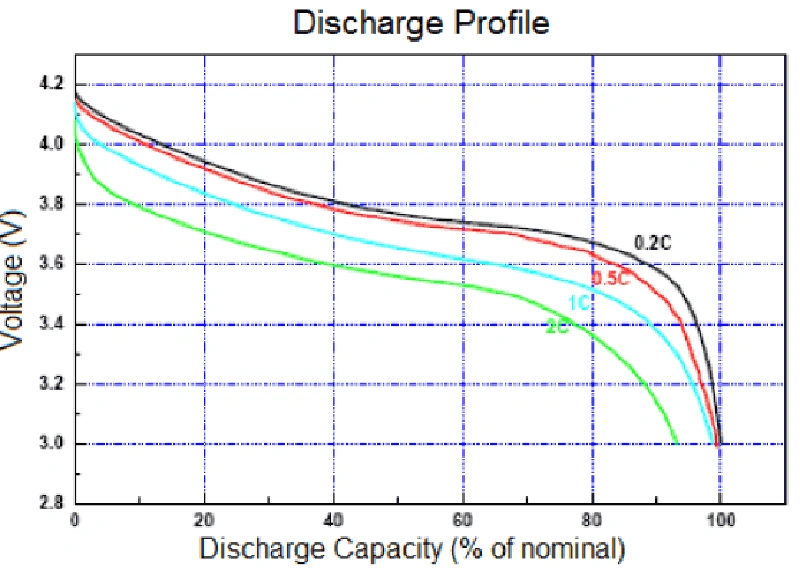
Over-discharging can permanently damage LiPo batteries, causing irreversible capacity degradation. You must strictly adhere to the following discharge requirements:
The discharge cut-off voltage for a single LiPo cell is typically 3.0V, but in practical applications, we recommend setting the cut-off voltage to around 3.2V to keep the battery in a shallow discharge range.
The actual operating current of your device should be less than our recommended continuous discharge rate. Operating at maximum discharge current for extended periods can easily lead to abnormal battery overheating and may even trigger safety hazards.
LiPo Battery Storage Guide: Best Practices

Proper Lipo battery storage management can extend battery shelf life and significantly reduce the risk of fire during warehousing.
Lipo battery storage voltage: 3.80V – 3.85V. Prolonged full charge (4.2V) can lead to high internal chemical pressure and increase the risk of expansion. Prolonged low voltage (<3.0V) can cause over-discharge and bulging.
It is recommended to perform a voltage check every 3 months. If the voltage drops below 3.4V, it should be recharged to 3.8V immediately.
Optimal storage environment: 15°C to 25°C, relative humidity: 45% – 75%.
Troubleshooting Common Risks & Fire Hazards
Identifying early failure signs of a battery is crucial for ensuring lipo battery safety. Based on our 10 years of experience manufacturing batteries, we have compiled the following guidelines for identifying common risks.
| Issue | Potential Root Cause | Risk Level | Recommended Action |
|---|---|---|---|
| Swelling | Overcharging, over-discharging, and high temperature can cause the internal electrolyte to produce gas. | High | Continued use is strictly prohibited. |
| Overheating | Internal micro-short circuit, high current surge, or BMS protection failure. | Extreme High | Disconnect the charging/discharging work immediately. |
| Imbalance | Long-term storage without maintenance, poor cell consistency, or increased internal resistance. | Middle | Check the lipo battery storage voltage. Try equal charging; if the voltage difference is still greater than 0.1V, it is considered a failure. |
| Physical Damage | Logistics impacts, drops, or production line crushing. | High | Even if there is no fire, isolation and observation are still required. |
Certifications & Compliance of Lithium Battery
Battery compliance is not only a technical hurdle, but also a core guarantee for brand owners and assemblers to avoid legal risks and ensure supply chain stability. You can check our quality 3.7V lipo battery here.
1. International Transportation and Logistics Safety Standards (UN38.3 & MSDS). This simulates the pressure, high and low temperature cycling, strong vibration, and physical shock that batteries may encounter during transportation. We provide MSDS (Material Safety Data Sheets) containing detailed chemical composition information to help you quickly complete import customs clearance.
2. Portable Device Safety Specifications (IEC 62133-2). Verifies that the battery cell maintains thermal stability under extreme physical pressure, effectively preventing the risk of thermal runaway.
3. North American and High-End Market Access (UL 1642 & UL 2054). UL 1642 focuses on the physical safety of the battery cell, while UL 2054 addresses the overall electrical safety of the battery pack.
4. New EU Regulations and Environmental Compliance (CE, RoHS & EU Battery Regulation). We can provide environmental reports for all battery raw materials, actively complying with green new energy policies.
FAQs About LiPo Battery Safety
Before disposal, you can discharge the battery to 0V; cover the battery tabs with insulating tape to prevent short circuit risks during transportation. LiPo batteries must not be disposed of in regular trash cans; they should be taken to a branded battery & electronic waste disposal center.
1. Any device containing lithium batteries or spare batteries is strictly prohibited in checked baggage.
2. Batteries for personal use must be placed in carry-on baggage. Rated energy less than 100Wh.
3. For large battery packs exceeding 100Wh but less than 160Wh, a UN38.3 report must be provided to the airline.