
Lithium polymer batteries have become the power source for many electronic products, but some brand owners and R&D engineers are unclear about their chemical principles and the detailed steps involved in customizing batteries. Today, from a professional manufacturing perspective, we will provide an in-depth analysis of what are lithium polymer batteries, selection criteria, and how to customize the best lithium polymer battery pack for your specific application scenario.
Table of Contents
ToggleLithium Polymer Battery Definition
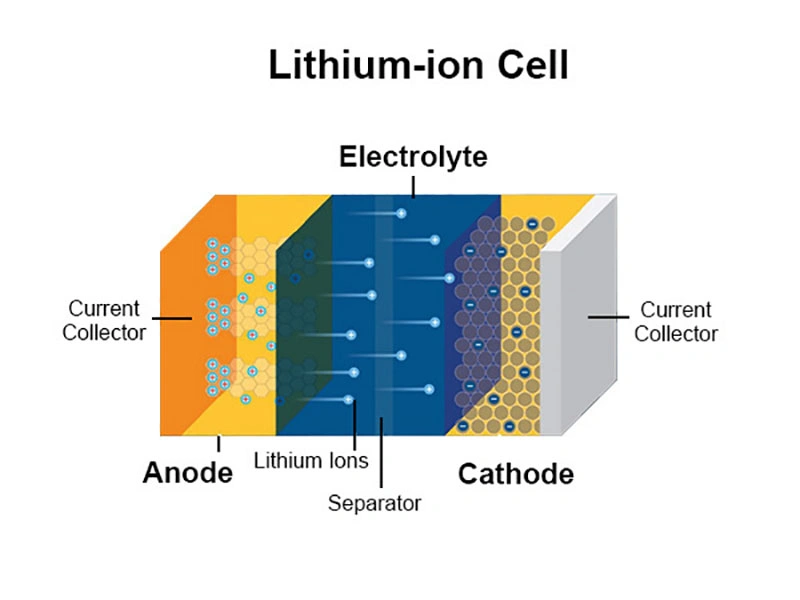
The electrolyte in a lithium polymer battery is a gel, not a solid or liquid, and it’s encapsulated using a thin aluminum-plastic composite film.
- Ultra-thin: Our polymer batteries can be as thin as 0.5mm, perfectly matching small-space devices like smart cards.
- Safety & stability: Unlike liquid electrolytes, they don’t easily boil or vaporize. Even if a polymer battery short-circuits, it will only bulge and smoke, not catch fire.
- Enhanced energy density: Polymer batteries have an energy density of 250Wh/Kg, approximately 10%–30% higher than cylindrical lithium-ion batteries. Therefore, in a battery case of the same volume, the former has a longer battery life than the latter.
How to Select Your Li-polymer Battery
Choosing the right li-polymer battery is not simply a matter of capacity and low price; it requires a systematic technical evaluation. Based on our 10 years of manufacturing experience, we focus on evaluating the following four core dimensions to ensure a perfect match between the battery and the device:
1. Dimensional Tolerance: The li-polymer battery increases its thickness by up to 8% during charging and discharging. After accurately assessing the battery compartment dimensions, you must also allow for reasonable redundancy to prevent casing breakage due to battery bulging.
2. Discharge C-Rate and Peak Power Requirements: IoT sensors may only require a small operating current, while drones require a 60C+ discharge rate for instantaneous startup. This is why we ask customers about continuous current and peak current.
3. Battery Capacity: According to the formula Device Runtime = Battery Capacity / Discharge Current, this directly determines the duration your device can operate.
4. Operating Temperature: The standard battery operating temperature range is -20℃ to 60℃. If your device operates in high or low temperature environments, we need to adjust the corresponding positive and negative electrode materials and electrolyte.
How to Customize Rechargeable Lithium Polymer Battery

Lithium polymer batteries are highly customizable, with no standard models. As a professional lithium polymer battery manufacturer, we have a complete OEM/ODM process to ensure precise matching to your specific needs.
Step 1: Define Your Electrical Specifications. We will collect basic information such as operating voltage, rated capacity, charge/discharge current, and maximum dimensions.
Step 2: Shape and Size Customization. This is the biggest advantage of lithium polymer batteries. We can customize rectangular, ultra-thin, curved, or irregularly shaped cells according to the internal space of your equipment. Through different winding methods and packaging processes for the positive and negative electrodes, Hongyitai can keep the lithium polymer battery within your size constraints.
Step 3: Integrated PCM and Safety Protection. All our exported rechargeable lithium polymer batteries are equipped with a precision-engineered protection board that integrates overcharge, over-discharge, short circuit, and over-temperature protection functions.
Step 4: Prototyping and Performance Validation. Before mass production, we will quickly produce samples for you to test the battery and verify the overall device performance. In addition, we will provide you with charge and discharge cycle data from our factory for your reference.
Lithium Polymer Battery Pack Applications: From IoT to Medical Devices
Our lithium polymer batteries have applications far beyond traditional consumer electronics. As a professional lithium polymer battery manufacturer, our batteries are also widely used in other industries.
1. IoT and Smart Wearable Devices. Due to the lightweight and long standby time (low self-discharge) of our polymer batteries, they are compatible with smartwatches, trackers, and smart rings, etc.
2. Portable Medical Devices. Medical devices have extremely demanding battery requirements, from handheld ultrasound diagnostic instruments to portable ventilators. Our lithium polymer battery packs provide stable and uninterrupted power. We equip all our medical batteries with protection circuits from Japanese DAA ICs to ensure compliance with stringent safety standards and electromagnetic compatibility requirements in critical medical scenarios.
3. Industrial Handheld Terminals & Robotics. To meet the high efficiency requirements of barcode scanners and collaborative robots, our lithium polymer batteries are designed to support high 5C rates and fast charging, significantly reducing device charging time.
4. Professional Drones and UAVs. The drone industry is a cutting-edge application area for lithium polymer battery packs. We can customize 30C, 60C, and 100C discharge rate batteries to provide powerful output for agricultural plant protection or surveying and exploration needs.
Regardless of your specific application, choosing the right rechargeable lithium polymer battery solution is key to enhancing product competitiveness. Hongyitai can provide high-quality polymer batteries tailored to your specific requirements.
FAQs About Li-polymer Battery
Yes. The biggest advantage of our lithium polymer batteries lies in their geometric flexibility. We can customize batteries to be ultra-thin, irregularly shaped, curved, and other forms to match the internal space and battery capacity of your product.
It depends on your application. 18650 Li-ion batteries are standard and inexpensive. However, if you need lightweight, prismatic batteries, then Li-polymer batteries are a better choice.
Additionally, polymer batteries are safer; they do not contain liquid electrolyte and do not pose a risk of fire or explosion even after physical damage.